
Solving Sewer Line Issues in Older Dorchester Homes Without Digging Up the Yard
The moment you notice sewage backing up in your basement or catch that unmistakable rotten egg smell wafting from your drains, panic sets in. For homeowners in Dorchester’s historic neighborhoods, the fear is compounded by visions of bulldozers tearing through your century-old landscaping and destroying the curb appeal of your Victorian triple-decker or Colonial Revival home.. Read more about Local drain snaking and hydro jetting for Allston student rentals.
The good news is that modern trenchless technology has revolutionized sewer line repair in Boston’s oldest neighborhoods. You can now restore your sewer system’s functionality without the destruction, noise, and weeks of excavation that once made sewer repairs a homeowner’s nightmare.
Dorchester’s unique housing stock presents specific challenges. Many homes built between 1880 and 1940 feature clay sewer pipes that have reached the end of their 50-70 year lifespan. These pipes, combined with Boston’s freeze-thaw cycles and the mature tree canopy throughout Ashmont, Fields Corner, and Savin Hill, create a perfect storm for sewer line failures.
Call (617) 749-9799 today to schedule your inspection before the next storm hits.
Common Causes of Sewer Line Failure in Dorchester
Understanding what’s happening underground is the first step to solving your sewer problems without unnecessary excavation. Dorchester’s aging infrastructure and specific environmental factors create predictable failure patterns.
Tree Root Intrusion represents the most common culprit. The mature maple, oak, and elm trees that give Dorchester its leafy character send roots searching for water sources. These roots find the smallest cracks in your clay pipes and begin growing inside, eventually blocking flow completely.
Clay Pipe Deterioration occurs naturally over decades. The joints between clay pipe sections separate, creating gaps where roots enter and sewage leaks into surrounding soil. The freeze-thaw cycles common in Boston accelerate this deterioration.
Combined Sewer Overflows in older sections of Dorchester can overwhelm aging systems during heavy rain events. When stormwater enters the system through cracks or illegal connections, it can back up into your home through the lowest fixtures.
Soil Settlement in areas with high clay content causes pipes to shift and break. The settling process, accelerated by Boston’s freeze-thaw cycles, creates bellies where waste collects and eventually causes complete blockages.
Our Diagnostic Process: State-of-the-Art Sewer Camera Inspections
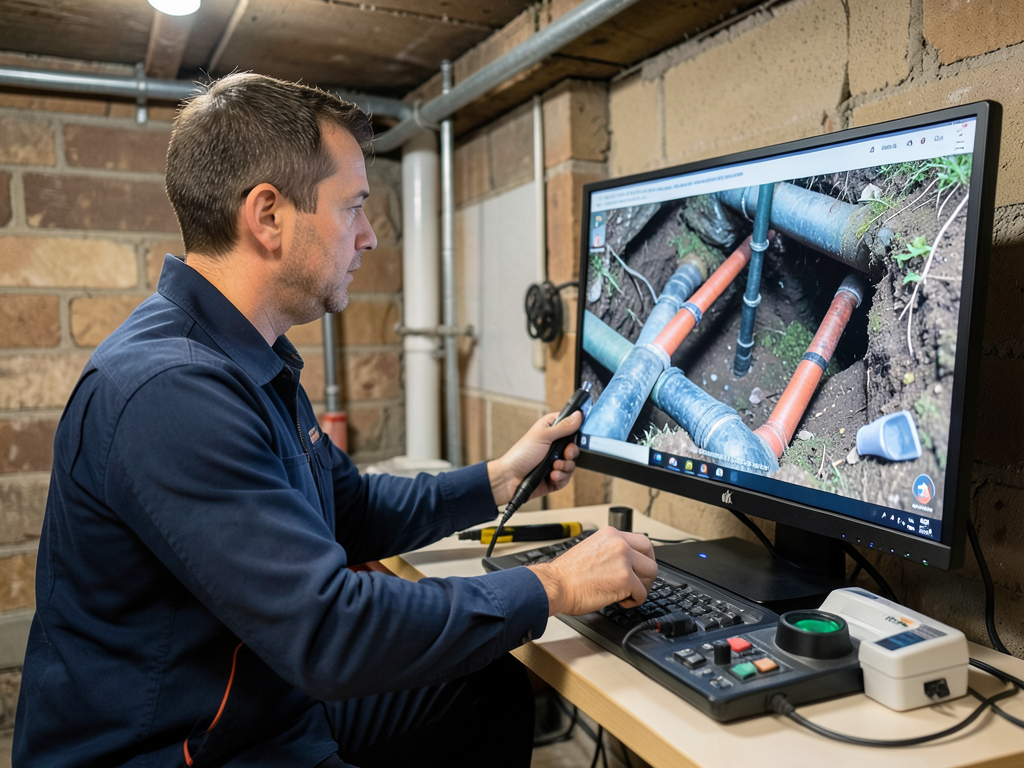
Before recommending any solution, we perform a comprehensive video camera inspection using specialized equipment that allows us to see exactly what’s happening inside your sewer line without any digging.. Read more about Living in the North End — What You Need to Know Before Updating Your Historic Plumbing.
The process begins with accessing your main sewer cleanout or creating a small access point. We then feed a high-resolution camera mounted on a flexible cable through your sewer line. The camera transmits real-time video to a monitor, allowing us to identify every issue along the pipe’s length.
During inspection, we look for specific indicators: cracks, separated joints, root intrusion, grease buildup, and pipe bellies. The camera also helps us locate the exact position and depth of problems, which is crucial for planning trenchless repairs.
The Screwdriver Test – After camera inspection, we perform physical testing by checking cleanout caps for proper sealing and testing for sewage odors around pipe penetrations. This hands-on verification ensures we don’t miss any surface indicators of underground problems.
Massachusetts Building Code 248 CMR 10.00 requires proper documentation of sewer line conditions before any repair work begins. Our inspection reports include video footage, problem locations marked on property maps, and recommendations that comply with Boston Water and Sewer Commission requirements.. Read more about How we fix low water pressure in Charlestown historic homes.
Trenchless Sewer Repair vs. Traditional Excavation in Boston
When facing sewer line problems, homeowners often assume excavation is their only option. However, trenchless technology offers several advantages specifically suited to Dorchester’s historic homes and tight urban lots.
| Repair Method | Cost Range | Timeline | Landscape Impact |
|---|---|---|---|
| Trenchless Pipe Lining | $80-120 per foot | 1-2 days | Minimal – small access holes |
| Pipe Bursting | $90-130 per foot | 1-2 days | Minimal – small access holes |
| Traditional Excavation | $150-250 per foot | 3-7 days | Extensive – full trench required |
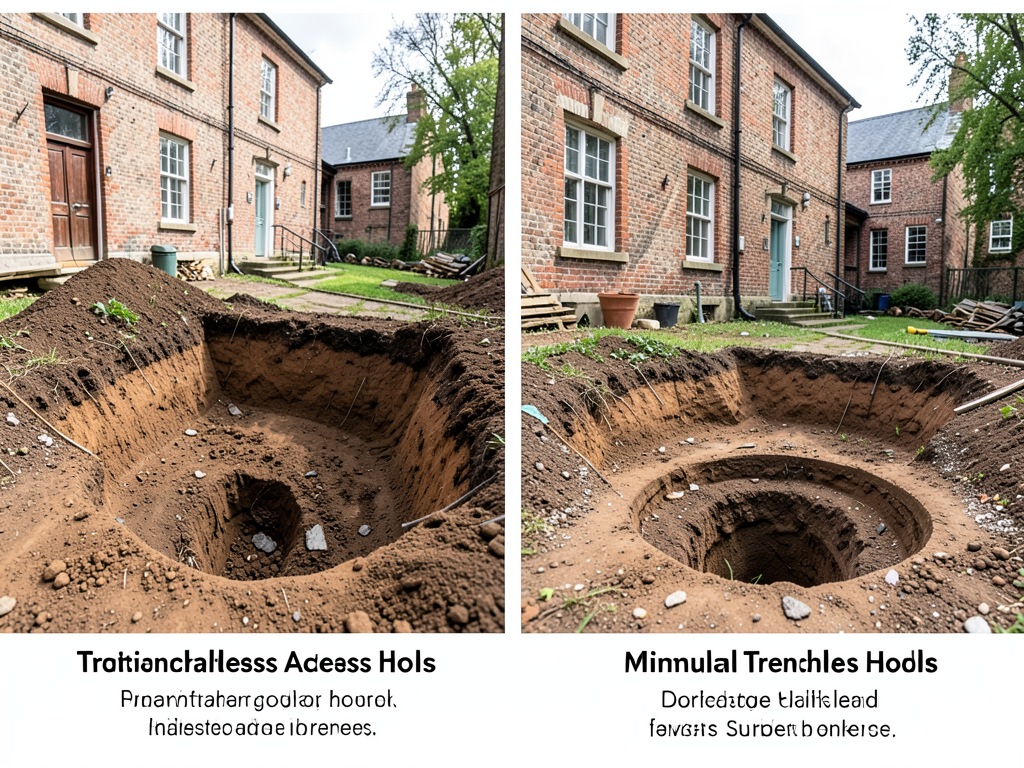
Pipe Lining involves inserting a flexible, resin-coated tube into your existing pipe. We then inflate the tube, which hardens to form a new, seamless pipe within your old one. This method works best for pipes with minor cracks or corrosion but no major structural damage.
Pipe Bursting is ideal for severely damaged pipes. We pull a new high-density polyethylene pipe through your old pipe while simultaneously breaking apart the old pipe outward. This method actually increases your pipe’s diameter and provides a lifetime warranty on the new pipe.
Traditional Excavation becomes necessary only when pipes have completely collapsed or when access for trenchless methods is impossible due to existing utilities or building foundations. Even then, we often can minimize excavation by using directional boring techniques.
The choice between methods depends on your specific situation, pipe material, damage extent, and budget. Our initial camera inspection determines which approach will provide the most cost-effective, long-lasting solution for your Dorchester home.
Navigating BWSC Permits and Regulations
Working in Boston requires strict compliance with Boston Water and Sewer Commission (BWSC) regulations. As a licensed contractor, we handle all permitting and ensure your repair meets current codes.
BWSC requires permits for any work affecting the building sewer connection to the public main. This includes pipe lining, pipe bursting, and excavation. The permitting process involves submitting detailed plans showing the work scope, pipe materials, and connection points.
Common Sewer vs. Building Sewer – In Dorchester’s older neighborhoods, you might share a common sewer lateral with neighboring properties. BWSC regulations require all affected property owners to sign off on repairs to common sewers. We handle this coordination as part of our service.
Material Requirements – Boston code requires specific materials for sewer repairs. For pipe lining, we use epoxy resins meeting NSF/ANSI Standard 61 for drinking water system components. For pipe bursting, we install SDR-35 high-density polyethylene pipe that exceeds BWSC specifications.
Inspection Requirements – BWSC mandates inspections at specific stages: before covering any work, after connection to the main, and upon project completion. We schedule these inspections and ensure your repair passes all required checks.
Dorchester’s specific challenges include narrow streets that complicate equipment staging and mature trees that require protection during any necessary excavation. Our experience with local conditions means we can navigate these challenges efficiently while maintaining compliance.
Why Choose Heritage Plumbing for Your Dorchester Home?
Heritage Plumbing brings 15+ years of experience solving Boston’s toughest sewer problems. Our team understands the unique challenges of working in Dorchester’s historic neighborhoods better than any other local contractor.
Local Expertise – We’ve worked on properties throughout Dorchester, from Ashmont’s Victorian homes to Savin Hill’s triple-deckers. This experience means we know exactly what to expect when we arrive at your property.
Emergency Response – Sewer backups don’t wait for business hours. We offer 24/7 emergency service throughout Dorchester with response times typically under two hours for urgent situations.
Complete Solutions – Unlike companies that only offer one repair method, we provide every option from simple spot repairs to full system replacements. This means we recommend what’s actually best for your situation, not what we happen to sell.
Insurance Coordination – Many sewer line repairs are covered by homeowner’s insurance when caused by sudden damage. We work directly with your insurance company to document damage and maximize your coverage.
Clean Work Sites – We understand that your home is your sanctuary. Our technicians use drop cloths, wear shoe covers, and clean thoroughly after every job. When we’re done, your property looks exactly as it did when we arrived.
Frequently Asked Questions About Sewer Repair in Boston
How do I know if I have a sewer line problem?
Common signs include multiple slow drains, gurgling sounds from toilets, sewage odors, wet spots in your yard, or foundation cracks. If you notice any of these, schedule a camera inspection immediately.. Read more about The real reason the drains in your Cambridge triple-decker stay clogged.
How long does trenchless sewer repair take?
Most trenchless repairs are completed in 1-2 days. Pipe lining typically takes one day, while pipe bursting might require two days for larger jobs. Traditional excavation usually takes 3-7 days.
Will my homeowner’s insurance cover sewer line repair?
Coverage depends on your policy and the cause of damage. Sudden damage from tree roots or pipe collapse is often covered, while gradual deterioration usually isn’t. We can help you understand your coverage and work with your insurance company.
What’s the lifespan of a repaired sewer line?
Trenchless repairs typically last 50+ years. Pipe lining creates a new pipe within your old one with a projected lifespan of 50-100 years. Pipe bursting with HDPE pipe comes with a lifetime warranty from the manufacturer.
How much does sewer line repair cost in Dorchester?
Costs vary based on pipe length, damage extent, and repair method. Trenchless repairs typically cost $80-130 per foot, while traditional excavation runs $150-250 per foot. We provide free estimates after camera inspection.
Do I need permits for sewer line repair?
Yes, BWSC requires permits for most sewer work. As a licensed contractor, we handle all permitting and ensure your repair meets all local codes and regulations.
Can you repair a sewer line under my foundation?
Yes, trenchless methods can repair pipes under foundations, driveways, and other structures. Pipe lining is particularly effective for these situations since it requires only small access holes.
What areas of Dorchester do you serve?
We serve all of Dorchester including Ashmont, Fields Corner, Savin Hill, Uphams Corner, Harbor Point, and Meeting House Hill. Our service area includes zip codes 02121, 02122, 02124, and 02125.
Don’t let sewer problems destroy your home and landscaping. Call (617) 749-9799 now for your free inspection.
Additional Resources
For more information about Boston’s sewer system and regulations, visit:
- Boston Water and Sewer Commission – Official information about permits and regulations
- Massachusetts Plumbing Code 248 CMR – State requirements for sewer repairs
Understanding Your Sewer System’s Vulnerability
Dorchester’s specific geological and historical factors create predictable failure patterns. The area’s high clay content soil, combined with Boston’s freeze-thaw cycles, puts tremendous stress on aging clay pipes. When temperatures fluctuate rapidly, the ground expands and contracts, causing pipes to shift and joints to separate.
The mature tree canopy throughout Dorchester adds another layer of complexity. Trees planted 50-100 years ago have root systems that extend far beyond their canopies, often reaching sewer lines 20-30 feet away. These roots detect the moisture and nutrients in sewer pipes and begin growing toward them, eventually penetrating even the smallest cracks.
Historic building practices also contribute to current problems. Many Dorchester homes were built with combined sewer systems that mix stormwater and sewage. When these systems become overwhelmed during heavy rain events, the excess water seeks escape routes through cracks and separated joints.
Understanding these vulnerabilities helps explain why trenchless repair methods are particularly effective in Dorchester. The technology addresses the specific failure modes common to this area without the destruction that traditional excavation would cause to mature landscapes and historic properties.
Ready to solve your sewer problems without destroying your yard? Call (617) 749-9799 for your free inspection.
{
“@context”: “https://schema.org”,
“@type”: “BlogPosting”,
“headline”: “Solving sewer line issues in older Dorchester homes without digging up the yard”,
“description”: “Expert trenchless sewer repair for Dorchester’s historic homes. No-dig solutions for aging clay pipes, tree root intrusion, and BWSC compliance. Call (617) 749-9799.”,
“wordCount”: 1812,
“datePublished”: “2026-02-20T08:34:00.000Z”,
“dateModified”: “2026-02-20T08:34:00.000Z”,
“inLanguage”: “en-US”,
“mainEntityOfPage”: {
“@type”: “WebPage”,
“@id”: “https://heritageplumbingboston.com”
},
“publisher”: {
“@type”: “LocalBusiness”,
“name”: “Heritage Plumbing Boston”,
“url”: “https://heritageplumbingboston.com”
},
“author”: {
“@type”: “Organization”,
“name”: “Heritage Plumbing Boston”,
“url”: “https://heritageplumbingboston.com”
},
“image”: {
“@type”: “ImageObject”,
“url”: “https://heritageplumbingboston.com/wp-content/uploads/2026/03/solving-sewer-line-issues-in-older-dorchester-home-1.png”
}
}
{
“@context”: “https://schema.org”,
“@type”: “Plumber”,
“name”: “Heritage Plumbing Boston”,
“url”: “https://heritageplumbingboston.com”,
“address”: {
“@type”: “PostalAddress”,
“addressLocality”: “Boston”
},
“areaServed”: {
“@type”: “City”,
“name”: “Boston”
}
}
{
“@context”: “https://schema.org”,
“@type”: “FAQPage”,
“mainEntity”: [
{
“@type”: “Question”,
“name”: “Why Choose Heritage Plumbing for Your Dorchester Home?”,
“acceptedAnswer”: {
“@type”: “Answer”,
“text”: “Heritage Plumbing brings 15+ years of experience solving Boston’s toughest sewer problems. Our team understands the unique challenges of working in Dorchester’s historic neighborhoods better than any other local contractor.”
}
},
{
“@type”: “Question”,
“name”: “How do I know if I have a sewer line problem?”,
“acceptedAnswer”: {
“@type”: “Answer”,
“text”: “Common signs include multiple slow drains, gurgling sounds from toilets, sewage odors, wet spots in your yard, or foundation cracks. If you notice any of these, schedule a camera inspection immediately.”
}
},
{
“@type”: “Question”,
“name”: “How long does trenchless sewer repair take?”,
“acceptedAnswer”: {
“@type”: “Answer”,
“text”: “Most trenchless repairs are completed in 1-2 days. Pipe lining typically takes one day, while pipe bursting might require two days for larger jobs. Traditional excavation usually takes 3-7 days.”
}
},
{
“@type”: “Question”,
“name”: “Will my homeowner’s insurance cover sewer line repair?”,
“acceptedAnswer”: {
“@type”: “Answer”,
“text”: “Coverage depends on your policy and the cause of damage. Sudden damage from tree roots or pipe collapse is often covered, while gradual deterioration usually isn’t. We can help you understand your coverage and work with your insurance company.”
}
},
{
“@type”: “Question”,
“name”: “What’s the lifespan of a repaired sewer line?”,
“acceptedAnswer”: {
“@type”: “Answer”,
“text”: “Trenchless repairs typically last 50+ years. Pipe lining creates a new pipe within your old one with a projected lifespan of 50-100 years. Pipe bursting with HDPE pipe comes with a lifetime warranty from the manufacturer.”
}
},
{
“@type”: “Question”,
“name”: “How much does sewer line repair cost in Dorchester?”,
“acceptedAnswer”: {
“@type”: “Answer”,
“text”: “Costs vary based on pipe length, damage extent, and repair method. Trenchless repairs typically cost $80-130 per foot, while traditional excavation runs $150-250 per foot. We provide free estimates after camera inspection.”
}
},
{
“@type”: “Question”,
“name”: “Do I need permits for sewer line repair?”,
“acceptedAnswer”: {
“@type”: “Answer”,
“text”: “Yes, BWSC requires permits for most sewer work. As a licensed contractor, we handle all permitting and ensure your repair meets all local codes and regulations.”
}
},
{
“@type”: “Question”,
“name”: “Can you repair a sewer line under my foundation?”,
“acceptedAnswer”: {
“@type”: “Answer”,
“text”: “Yes, trenchless methods can repair pipes under foundations, driveways, and other structures. Pipe lining is particularly effective for these situations since it requires only small access holes.”
}
},
{
“@type”: “Question”,
“name”: “What areas of Dorchester do you serve?”,
“acceptedAnswer”: {
“@type”: “Answer”,
“text”: “We serve all of Dorchester including Ashmont, Fields Corner, Savin Hill, Uphams Corner, Harbor Point, and Meeting House Hill. Our service area includes zip codes 02121, 02122, 02124, and 02125.”
}
}
]
}
{
“@context”: “https://schema.org”,
“@type”: “BreadcrumbList”,
“itemListElement”: [
{
“@type”: “ListItem”,
“position”: 1,
“name”: “Home”,
“item”: “https://heritageplumbingboston.com”
},
{
“@type”: “ListItem”,
“position”: 2,
“name”: “Blog”,
“item”: “https://heritageplumbingboston.com/blog”
},
{
“@type”: “ListItem”,
“position”: 3,
“name”: “Solving sewer line issues in older Dorchester homes without digging up the yard”
}
]
}
{
“@context”: “https://schema.org”,
“@type”: “Service”,
“serviceType”: “Plumbing”,
“provider”: {
“@type”: “LocalBusiness”,
“name”: “Heritage Plumbing Boston”,
“url”: “https://heritageplumbingboston.com”
},
“areaServed”: {
“@type”: “City”,
“name”: “Boston”
},
“description”: “Expert trenchless sewer repair for Dorchester’s historic homes. No-dig solutions for aging clay pipes, tree root intrusion, and BWSC compliance. Call (617) 749-9799.”
}