
Why Your Condo Association in the Seaport Might Require Leak Sensors
Living in a Boston Seaport high-rise means enjoying modern amenities and waterfront views but also facing unique plumbing risks. Multi-story condo buildings in the Seaport District experience significantly higher rates of water damage claims compared to single-family homes. A single undetected leak on the 20th floor can cascade through dozens of units below causing millions in damage. This is why many Seaport condo associations are now requiring smart leak detection systems as standard building infrastructure. Boston building codes.
The High Cost of Water Damage in Boston High-Rises
The Seaport’s modern high-rises face pressure challenges that older Boston buildings never experienced. Municipal water pressure in the Seaport often exceeds 80 PSI due to pumping requirements for tall buildings. This creates stress on plumbing joints and connections that can fail without warning. When a supply line bursts on an upper floor the water volume released in the first 10 minutes can fill a swimming pool. Reliable 24 hour plumbing repair in the Back Bay.
Secondary damage multiplies the problem. Water traveling through walls and ceilings carries dissolved minerals that corrode electrical systems and create mold growth within 24-48 hours. Insurance data shows the average water damage claim in a Boston high-rise exceeds $50,000 when you factor in mold remediation and unit-to-unit liability disputes. Water heater replacement and repair for South Boston condos.
How Smart Leak Sensors Protect Multi-Unit Buildings
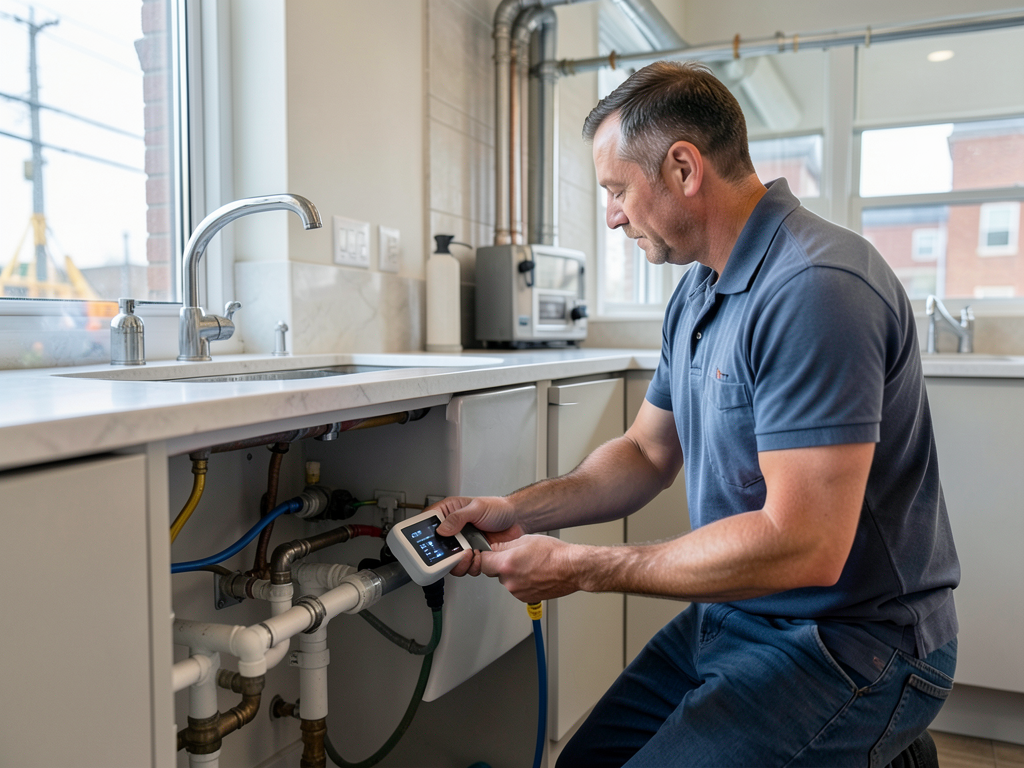
Modern leak detection systems work through two primary mechanisms. Point sensors monitor specific areas like under sinks or near water heaters and trigger local alarms when moisture is detected. Whole-home systems like Flo by Moen or Phyn Plus monitor water flow patterns throughout the building and can automatically shut off the main water supply when abnormal usage suggests a leak. Gas leak detection and emergency repair for Jamaica Plain residents.
The automatic shut-off feature proves critical in high-rise settings. When a toilet supply line fails on the 15th floor these systems can stop water flow within 5 seconds preventing thousands of gallons from flooding lower units. The sensors also monitor for frozen pipe conditions during Boston’s harsh winters providing early warning before catastrophic bursts occur.. Read more about The Safest Way to Locate the Main Water Shutoff in a Multi Family Medford Home.
HOA Requirements and Insurance Benefits
Many Seaport condo associations now mandate leak detection systems as part of their building codes. The Boston Board of Building Regulations and Standards requires all new high-rise construction to include water monitoring systems that meet International Plumbing Code standards. Existing buildings are increasingly adopting similar requirements through special assessments.. Read more about Why Your High Rise Condo in the Seaport District Still Needs a Pressure Reducing Valve.
Insurance companies offer substantial premium discounts for buildings with monitored leak detection. Boston-area insurers like Liberty Mutual and Amica report that buildings with automatic shut-off valves experience 60% fewer water damage claims. These discounts often offset the system cost within 2-3 years while providing 24/7 protection.. Read more about Why Your Water Bill in Newton is Spiking and How to Find the Hidden Leak.
Professional Installation vs. DIY Approaches
Installing leak sensors in a high-rise condo requires understanding the building’s unique plumbing infrastructure. Boston’s Seaport buildings often feature complex water distribution systems with multiple pressure zones and shared stacks. Professional installation ensures sensors are placed at critical junctions where leaks are most likely to occur. Heavy duty sump pump installation for flood-prone basements in Quincy.
DIY installations frequently miss these key locations resulting in false alarms or missed detections. Professional plumbers calibrate systems to account for normal water usage patterns in multi-unit buildings preventing unnecessary shut-offs during peak usage times. They also ensure compliance with Massachusetts 248 CMR plumbing codes regarding automatic water shut-off devices. Massachusetts plumbing code.
Winter Protection and Seasonal Considerations
Boston’s freeze-thaw cycles create unique challenges for high-rise plumbing. Temperature sensors integrated with leak detection systems monitor for conditions that could cause pipe freezing. When temperatures approach freezing the systems can alert building management to take preventive action such as maintaining minimum water flow or adjusting heating systems.
For seasonal residents who winter elsewhere these systems provide peace of mind through smartphone monitoring. Building managers receive instant alerts if temperatures drop or if abnormal water usage patterns suggest a problem. This remote monitoring capability proves invaluable for snowbirds who might otherwise face extensive damage upon returning in spring.
Cost-Benefit Analysis for Condo Associations
The initial investment in building-wide leak detection typically ranges from $2,000 to $5,000 per unit depending on building size and system complexity. However the return on investment becomes clear when comparing potential damage costs. A single major leak event can cost a condo association over $100,000 in repairs and legal fees.. Read more about Comparing Dual Flush vs Single Flush Toilets for Your Small South Boston Apartment.
Beyond direct damage prevention these systems reduce insurance premiums increase property values and minimize tenant disruption. Many associations find the systems pay for themselves within 3-5 years through these combined benefits. The systems also provide valuable data about building water usage patterns helping identify inefficient fixtures or potential maintenance issues.. Read more about What Homeowners in Marblehead Need to Know About Coastal Sump Pump Failures.
Integration with Building Management Systems
Modern leak detection integrates seamlessly with existing building management systems. The sensors connect to central monitoring stations that track water usage patterns across the entire building. This data helps property managers identify trends optimize water consumption and schedule preventative maintenance before problems occur.
The integration extends to emergency response systems. When a leak is detected building management receives instant notifications along with the exact location and severity of the issue. This allows for rapid response minimizing damage and coordinating with repair services. Some systems even integrate with elevator controls to prevent water from reaching electrical components.
Compliance with Boston Building Codes
Boston’s building codes continue to evolve regarding water damage prevention. The Boston Water and Sewer Commission now requires all new high-rise construction to include leak detection capable of automatic water shut-off. Existing buildings undergoing major renovations must also upgrade to meet these standards. Solving sewer line issues in older Dorchester homes without digging up the yard.
The Massachusetts State Plumbing Code 248 CMR 10.00 mandates specific requirements for automatic water shut-off valves including fail-safe operation and manual override capabilities. Professional installation ensures compliance with these regulations while maintaining building insurance coverage and avoiding potential liability issues.
Emergency Response Integration
Professional leak detection systems integrate with 24/7 emergency monitoring services. When a sensor detects water or abnormal flow patterns the monitoring center immediately contacts building management and dispatches emergency plumbing services if needed. This rapid response capability proves critical during off-hours when damage can escalate unchecked.
The emergency response includes coordination with restoration services to begin water extraction and drying procedures immediately. This integrated approach minimizes secondary damage from mold growth and structural deterioration. Many systems also provide documentation for insurance claims including time-stamped alerts and response records.
Future-Proofing Your Building Investment
As Boston’s Seaport continues to develop building codes and insurance requirements will likely become more stringent regarding water damage prevention. Installing modern leak detection systems now positions your building ahead of future compliance requirements while protecting your investment from water-related risks.
The technology continues to advance with new features like predictive maintenance alerts and integration with smart building platforms. Buildings with modern leak detection systems demonstrate to potential buyers and tenants that management prioritizes property protection and operational efficiency. This technological advantage can translate into higher property values and occupancy rates.
Don’t wait for a major leak to discover your building’s vulnerabilities. Call (617) 749-9799 today to schedule a professional assessment of your Seaport condo’s leak detection needs. Our licensed Master Plumbers understand Boston’s unique building codes and can recommend the right system to protect your investment.
Frequently Asked Questions
Are leak sensors required by law in Boston condos?
While not universally mandated yet many Boston condo associations now require leak detection systems especially in high-rise buildings. New construction must comply with Boston building codes requiring water monitoring systems. Check your HOA bylaws for specific requirements.
How much do professional leak detection systems cost?
Professional installation typically costs $2,000 to $5,000 per unit depending on building size and system complexity. This includes sensors automatic shut-off valves and integration with building management systems. Many associations find the investment pays for itself through insurance discounts and damage prevention.
Can I install leak sensors myself?
DIY installation often misses critical locations and may not comply with Boston building codes. Professional installation ensures proper sensor placement system calibration and code compliance. Licensed plumbers also provide warranties and emergency support that DIY systems cannot match.
How quickly do these systems respond to leaks?
Modern automatic shut-off systems detect abnormal water flow and stop water within 5 seconds of detection. Point sensors trigger local alarms immediately upon moisture detection. Combined with 24/7 monitoring this rapid response prevents extensive damage in multi-story buildings.
Will leak sensors work during power outages?
Quality systems include battery backup ensuring continued operation during power outages. The automatic shut-off valves maintain their last position even without power. Battery life typically provides 24-48 hours of operation giving ample time to address power restoration or manual intervention.
{
“@context”: “https://schema.org”,
“@type”: “BlogPosting”,
“headline”: “Why Your Condo Association in the Seaport Might Require Leak Sensors”,
“description”: “Learn why Boston Seaport condo associations are mandating leak sensors to prevent multi-million dollar water damage in high-rise buildings. Get expert installation.”,
“wordCount”: 1463,
“datePublished”: “2026-06-03T08:38:00.000Z”,
“dateModified”: “2026-06-03T08:38:00.000Z”,
“inLanguage”: “en-US”,
“mainEntityOfPage”: {
“@type”: “WebPage”,
“@id”: “https://heritageplumbingboston.com”
},
“publisher”: {
“@type”: “LocalBusiness”,
“name”: “Heritage Plumbing Boston”,
“url”: “https://heritageplumbingboston.com”
},
“author”: {
“@type”: “Organization”,
“name”: “Heritage Plumbing Boston”,
“url”: “https://heritageplumbingboston.com”
},
“image”: {
“@type”: “ImageObject”,
“url”: “https://heritageplumbingboston.com/wp-content/uploads/2026/03/why-your-condo-association-in-the-seaport-might-re-1.png”
}
}
{
“@context”: “https://schema.org”,
“@type”: “Plumber”,
“name”: “Heritage Plumbing Boston”,
“url”: “https://heritageplumbingboston.com”,
“address”: {
“@type”: “PostalAddress”,
“addressLocality”: “Boston”
},
“areaServed”: {
“@type”: “City”,
“name”: “Boston”
}
}
{
“@context”: “https://schema.org”,
“@type”: “FAQPage”,
“mainEntity”: [
{
“@type”: “Question”,
“name”: “Are leak sensors required by law in Boston condos?”,
“acceptedAnswer”: {
“@type”: “Answer”,
“text”: “While not universally mandated yet many Boston condo associations now require leak detection systems especially in high-rise buildings. New construction must comply with Boston building codes requiring water monitoring systems. Check your HOA bylaws for specific requirements.”
}
},
{
“@type”: “Question”,
“name”: “How much do professional leak detection systems cost?”,
“acceptedAnswer”: {
“@type”: “Answer”,
“text”: “Professional installation typically costs $2,000 to $5,000 per unit depending on building size and system complexity. This includes sensors automatic shut-off valves and integration with building management systems. Many associations find the investment pays for itself through insurance discounts and damage prevention.”
}
},
{
“@type”: “Question”,
“name”: “Can I install leak sensors myself?”,
“acceptedAnswer”: {
“@type”: “Answer”,
“text”: “DIY installation often misses critical locations and may not comply with Boston building codes. Professional installation ensures proper sensor placement system calibration and code compliance. Licensed plumbers also provide warranties and emergency support that DIY systems cannot match.”
}
},
{
“@type”: “Question”,
“name”: “How quickly do these systems respond to leaks?”,
“acceptedAnswer”: {
“@type”: “Answer”,
“text”: “Modern automatic shut-off systems detect abnormal water flow and stop water within 5 seconds of detection. Point sensors trigger local alarms immediately upon moisture detection. Combined with 24/7 monitoring this rapid response prevents extensive damage in multi-story buildings.”
}
},
{
“@type”: “Question”,
“name”: “Will leak sensors work during power outages?”,
“acceptedAnswer”: {
“@type”: “Answer”,
“text”: “Quality systems include battery backup ensuring continued operation during power outages. The automatic shut-off valves maintain their last position even without power. Battery life typically provides 24-48 hours of operation giving ample time to address power restoration or manual intervention.”
}
}
]
}
{
“@context”: “https://schema.org”,
“@type”: “BreadcrumbList”,
“itemListElement”: [
{
“@type”: “ListItem”,
“position”: 1,
“name”: “Home”,
“item”: “https://heritageplumbingboston.com”
},
{
“@type”: “ListItem”,
“position”: 2,
“name”: “Blog”,
“item”: “https://heritageplumbingboston.com/blog”
},
{
“@type”: “ListItem”,
“position”: 3,
“name”: “Why Your Condo Association in the Seaport Might Require Leak Sensors”
}
]
}
{
“@context”: “https://schema.org”,
“@type”: “Service”,
“serviceType”: “Plumbing”,
“provider”: {
“@type”: “LocalBusiness”,
“name”: “Heritage Plumbing Boston”,
“url”: “https://heritageplumbingboston.com”
},
“areaServed”: {
“@type”: “City”,
“name”: “Boston”
},
“description”: “Learn why Boston Seaport condo associations are mandating leak sensors to prevent multi-million dollar water damage in high-rise buildings. Get expert installation.”
}