
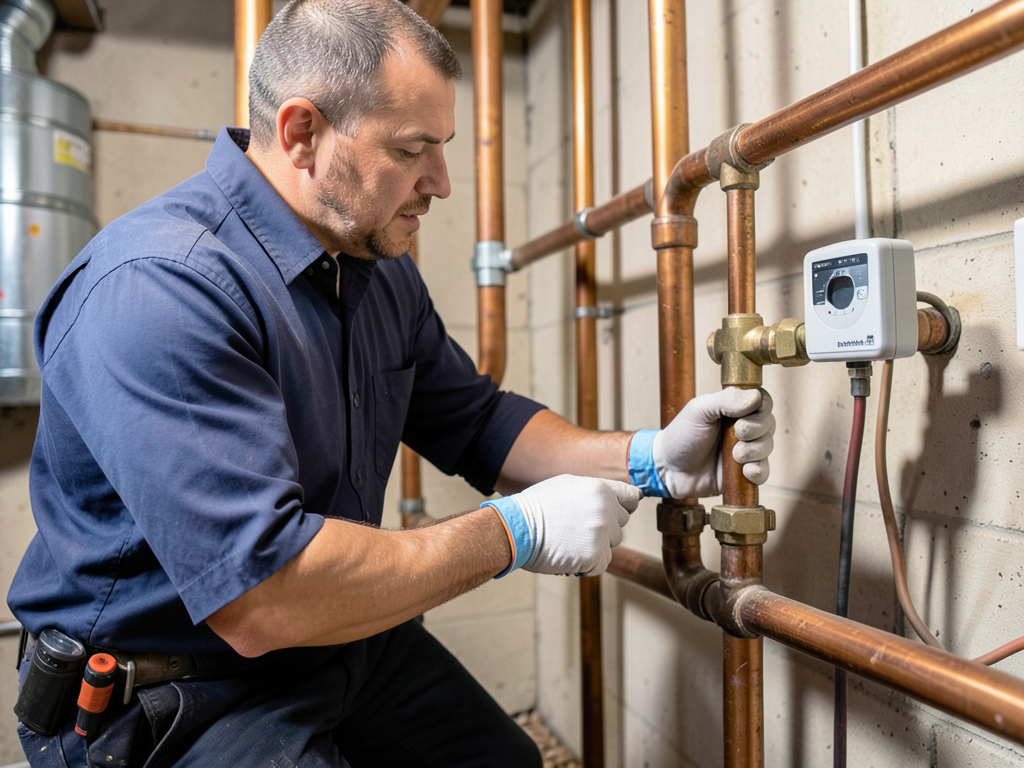
Why Smart Water Shutoff Valves Are Becoming Essential for Belmont Homeowners
Water damage from burst pipes, leaking appliances, or frozen plumbing can cost Belmont homeowners thousands in repairs and lost belongings. Smart water shutoff valves now offer automatic leak detection and emergency water shutoff right at your main supply line. These systems connect to your Wi-Fi network and smartphone, giving you real-time alerts and remote control over your home’s water flow. For Belmont’s mix of historic homes and modern properties, these devices provide critical protection against the region’s freeze-thaw cycles and aging infrastructure. EPA WaterSense water conservation program.
Massachusetts plumbing code requires proper backflow prevention and accessible shutoff valves for all residential properties. Smart valves meet these requirements while adding leak detection sensors that monitor water pressure, flow rate, and temperature. When the system detects unusual patterns that indicate a leak, it automatically closes the valve within seconds. This immediate response can prevent basement flooding, mold growth, and structural damage that often occur when homeowners are away or asleep. Massachusetts Uniform State Plumbing Code 248 CMR 10.00.
Belmont residents face specific risks that make smart valves particularly valuable. The town’s combination of older Victorian homes with original plumbing and newer constructions creates diverse vulnerability patterns. Winter temperatures frequently drop below freezing, causing pipes to burst when ice expands inside them. The area’s high water table also means basement flooding can occur during heavy rains or rapid snowmelt. Smart valves with temperature sensors can detect freezing conditions before pipes burst, giving you time to take preventive action. Reliable 24 hour plumbing repair in the Back Bay.
Installation requires access to your main water line, typically located in the basement or utility closet. A licensed Massachusetts plumber must handle the installation to ensure compliance with 248 CMR 10.00 (Uniform State Plumbing Code). The process involves cutting into the main line, installing the motorized valve, and connecting it to your home’s Wi-Fi network. Professional installation ensures proper pipe sizing, secure connections, and integration with your existing plumbing system. Most installations take 2-4 hours depending on your home’s configuration and the valve’s location. Water heater replacement and repair for South Boston condos.
Insurance companies increasingly recognize smart valves as legitimate risk-reduction devices. Many Massachusetts carriers offer premium discounts of 5-10% for homes with professionally installed smart water monitoring systems. Some companies even require these devices for coverage in high-risk areas or for homes with previous water damage claims. The combination of automatic shutoff and 24/7 monitoring provides documentation that can speed up claims processing if damage does occur.
Modern smart valves offer features beyond basic leak detection. They can monitor water usage patterns to identify hidden leaks, track consumption for conservation efforts, and provide freeze warnings when temperatures drop. Some systems integrate with whole-home water filtration or water softener setups common in Belmont homes. The mobile apps allow you to shut off water remotely, check system status, and receive alerts even when traveling. Battery backup ensures protection during power outages, a critical feature during New England’s frequent winter storms. Gas leak detection and emergency repair for Jamaica Plain residents.
Cost considerations vary based on your home’s plumbing configuration and the specific system chosen. Basic smart valves start around $400-600 for the hardware, with professional installation adding $300-500. Premium systems with advanced features like ultrasonic leak detection or automatic valve exercise can cost $1,000-1,500 installed. These prices reflect the complexity of working with Belmont’s mix of copper, PEX, and older galvanized pipes. Some homeowners qualify for Mass Save rebates or local utility incentives that can offset part of the installation cost. Heavy duty sump pump installation for flood-prone basements in Quincy.
Maintenance requirements are minimal but important. The motorized valve should be exercised monthly to prevent seizing, and batteries in wireless sensors need replacement every 1-2 years. Professional plumbers recommend annual system checks to verify sensor calibration and valve operation. The mobile apps provide diagnostics and maintenance reminders, making it easy to keep your system functioning properly. Unlike traditional manual shutoff valves that can corrode and become difficult to operate, smart valves maintain their functionality through regular automated testing.
Emergency scenarios demonstrate the true value of these systems. A washing machine hose burst while you’re at work could release 600 gallons of water per hour into your basement. A smart valve detects the abnormal flow within seconds and shuts off the supply, limiting damage to a few gallons instead of thousands. Similarly, a pipe freezing and cracking overnight triggers the temperature sensor, allowing you to address the issue before catastrophic failure occurs. These real-world applications show why more Belmont homeowners are installing these systems as standard home protection.
Call (617) 749-9799 today to schedule your smart valve consultation. Our Massachusetts-licensed plumbers understand Belmont’s specific plumbing challenges and can recommend the right system for your home. Don’t wait for the next plumbing emergency to discover you need this protection.
Top Smart Water Shutoff Valves for Belmont Homes
Different smart valve systems offer varying features and compatibility with Belmont’s diverse housing stock. Understanding these differences helps you choose the right protection for your specific situation.
| Valve Model | Key Features | Best For | Installation Complexity |
|---|---|---|---|
| Flo by Moen | Pressure monitoring, ultrasonic detection, temperature sensing | Whole-home protection, high-end systems | Professional required |
| Phyn Plus | Machine learning, water usage tracking, freeze detection | Tech-savvy homeowners, conservation focus | Professional required |
| StreamLabs Control | Budget-friendly, basic leak detection, manual override | Simple protection, older homes | DIY or pro |
| Guardian Leak Prevention | Multiple sensor support, easy installation | Point-of-use protection, additions | DIY friendly |
Each system connects differently to your plumbing. Flo by Moen uses a ball valve design that requires full-flow installation. Phyn Plus employs similar technology but adds more sophisticated pressure wave analysis. StreamLabs uses a motorized ball valve that’s easier to retrofit in tight spaces. Your plumber will assess your main line configuration, water pressure, and available space to recommend the optimal solution.
Belmont’s mix of copper and PEX piping affects installation choices. Copper requires proper deburring and reaming to prevent turbulence that can trigger false alarms. PEX installations need expansion fittings that won’t restrict flow. Professional plumbers understand these nuances and can prevent common installation errors that cause system failures or reduced water pressure.
The Installation Process: What to Expect
Professional installation follows a systematic process that ensures code compliance and reliable operation. Understanding each step helps you prepare your home and know what to expect during the service call.
- Main Line Assessment
The plumber locates your main water shutoff, evaluates pipe material and diameter, and checks water pressure. Homes built before 1980 often have 3/4-inch galvanized pipes that may need replacement to ensure proper valve function.
- Valve Integration
The main line is shut off at the street, and the existing manual valve is removed. The smart valve is installed using appropriate fittings for your pipe material. All connections are pressure tested to ensure leak-free operation.
- Wi-Fi Calibration
The valve’s control unit is connected to your home network. Signal strength is verified, as weak connections can delay alerts or prevent remote operation. Some systems require a dedicated 2.4GHz network for reliable communication.
- App Setup and Testing
The mobile app is configured with your preferences, emergency contacts, and notification settings. The system undergoes comprehensive testing including manual shutoff, leak simulation, and temperature monitoring to verify all features work correctly.
Massachusetts requires permits for any work that modifies the main water supply line. Your plumber will handle permit acquisition and ensure all work meets 248 CMR 10.00 requirements. This includes proper valve accessibility, backflow prevention, and seismic strapping where required. Skipping permits can result in fines and insurance complications if damage occurs.
Power requirements vary by system. Most smart valves need continuous power through a standard outlet, while some offer battery backup for 24-48 hours of operation. Your installation location must have nearby power access or provisions for battery-operated units. Professional installers can add weatherproof outlet boxes or run conduit if needed.. Read more about Is a Sump Pump Battery Backup Worth the Investment for Your Basement in Melrose.
Save on Massachusetts Homeowners Insurance
Insurance carriers increasingly offer discounts for smart water monitoring systems as part of their risk mitigation programs. These discounts reflect the reduced likelihood of costly water damage claims.
Liberty Mutual, Amica, and other major Massachusetts insurers provide 5-10% premium reductions for homes with professionally installed smart valves. Some companies require installation by a licensed plumber and verification of proper operation. The documentation typically includes the installation invoice, system specifications, and confirmation that the device meets insurance carrier requirements.
Beyond direct discounts, smart valves can prevent the rate increases that often follow water damage claims. A single water damage claim can raise premiums by 20-40% for several years. The smart valve’s ability to prevent or minimize damage can save you thousands in avoided premium increases over the system’s lifetime.
Some insurance companies now offer deductible reductions for smart valve installations. Instead of the standard $1,000 deductible, you might qualify for a $500 deductible when the system is active and properly maintained. This benefit applies even if the valve doesn’t prevent all damage, as its presence demonstrates proactive risk management.
Mass Save and local utilities occasionally offer rebates for water conservation devices that include smart monitoring systems. While not all smart valves qualify, systems that track and reduce water usage may be eligible for incentives. Check with your utility provider about current programs and requirements.
Cost Factors for Belmont Residents
Installation costs in Belmont reflect the area’s specific challenges, including older home configurations and winter weather considerations. Understanding these factors helps you budget appropriately.
Basic smart valve systems cost $400-600 for the hardware alone. Professional installation in Belmont typically adds $300-500, bringing total costs to $700-1,100 for standard installations. Premium systems with advanced features can cost $1,000-1,500 installed. These prices assume straightforward access to your main water line and standard plumbing configurations.
Older Belmont homes often require additional work that increases costs. Homes built before 1950 may have lead service lines that need replacement before smart valve installation. Galvanized pipes over 50 years old can have internal corrosion that restricts flow and requires replacement. These issues can add $500-2,000 to installation costs but are necessary for system reliability.
Winter installation considerations affect pricing. Frozen ground can make outdoor water shutoff difficult, requiring additional labor to access the curb stop. Plumbers may need to use heated tools or work during warmer periods, potentially increasing labor costs by 20-30%. Scheduling installation during fall or spring can reduce these winter-related expenses.
Commercial properties and larger homes with multiple water meters may need zone-specific valves rather than a single whole-home system. This approach can cost 40-60% more but provides better control over different building areas. Hotels, multi-unit buildings, and large estates particularly benefit from zoned protection despite higher initial costs.
Frequently Asked Questions
How long do smart water shutoff valves last?
Quality smart valves typically last 10-15 years with proper maintenance. The motorized components may need replacement after 7-10 years, while the valve body itself can last the lifetime of your plumbing if not subjected to excessive pressure or corrosive water conditions.
Will a smart valve work during a power outage?
Most systems include battery backup that maintains basic functionality for 24-48 hours. The valve will still close if it detects a leak, but you may lose remote monitoring and control features until power is restored. Some premium systems offer extended battery life or generator compatibility.
Do I need a specific pipe size for installation?
Smart valves are available for 3/4-inch and 1-inch main lines, which cover most residential applications. Larger homes or those with higher water demands may have 1-1/4-inch or 1-1/2-inch lines requiring specialized valves. Your plumber will measure your main line and recommend the appropriate size.
Will the valve shut off my fire sprinklers?
Smart valves are designed to protect domestic water supply only. Fire sprinkler systems typically have separate shutoff valves and are not affected by whole-home smart valve installations. However, you should inform your installer about any fire protection systems to ensure proper integration and code compliance.
Can I install a smart valve myself?
Massachusetts plumbing code requires licensed professionals to modify main water supply lines. DIY installation violates code requirements and can void insurance coverage. Professional installation ensures proper sizing, secure connections, and compliance with all local regulations.
Protect Your Belmont Home Today
Smart water shutoff valves represent a significant advancement in home protection technology. For Belmont homeowners dealing with aging infrastructure, harsh winters, and the high costs of water damage, these systems offer peace of mind and potential insurance savings. The combination of automatic leak detection, remote monitoring, and insurance discounts makes these devices increasingly essential for modern home protection.
Don’t wait for a plumbing emergency to discover you need this protection. Call (617) 749-9799 today to schedule your smart valve consultation. Our Massachusetts-licensed plumbers understand Belmont’s specific plumbing challenges and can recommend the right system for your home. Whether you live in a historic Victorian or a modern construction, we have solutions that protect your property and your peace of mind.
Pick up the phone and call (617) 749-9799 before the next storm hits. Water damage doesn’t wait for convenient times, but with a smart valve installed by Heritage Plumbing, you’ll be ready for whatever comes your way. Storm Drain Cleaning & Repair.
{
“@context”: “https://schema.org”,
“@type”: “BlogPosting”,
“headline”: “Why Smart Water Shutoff Valves Are Becoming Essential for Belmont Homeowners”,
“description”: “Protect your Belmont home from costly water damage with smart shutoff valves. Learn how they work, installation costs, and local insurance discounts for 2026.”,
“wordCount”: 2201,
“datePublished”: “2026-03-12T09:26:00.000Z”,
“dateModified”: “2026-03-12T09:26:00.000Z”,
“inLanguage”: “en-US”,
“mainEntityOfPage”: {
“@type”: “WebPage”,
“@id”: “https://heritageplumbingboston.com”
},
“publisher”: {
“@type”: “LocalBusiness”,
“name”: “Heritage Plumbing Boston”,
“url”: “https://heritageplumbingboston.com”
},
“author”: {
“@type”: “Organization”,
“name”: “Heritage Plumbing Boston”,
“url”: “https://heritageplumbingboston.com”
},
“image”: {
“@type”: “ImageObject”,
“url”: “https://heritageplumbingboston.com/wp-content/uploads/2026/03/why-smart-water-shutoff-valves-are-becoming-essent-1.png”
}
}
{
“@context”: “https://schema.org”,
“@type”: “Plumber”,
“name”: “Heritage Plumbing Boston”,
“url”: “https://heritageplumbingboston.com”,
“address”: {
“@type”: “PostalAddress”,
“addressLocality”: “Boston”
},
“areaServed”: {
“@type”: “City”,
“name”: “Boston”
}
}
{
“@context”: “https://schema.org”,
“@type”: “FAQPage”,
“mainEntity”: [
{
“@type”: “Question”,
“name”: “How long do smart water shutoff valves last?”,
“acceptedAnswer”: {
“@type”: “Answer”,
“text”: “Quality smart valves typically last 10-15 years with proper maintenance. The motorized components may need replacement after 7-10 years, while the valve body itself can last the lifetime of your plumbing if not subjected to excessive pressure or corrosive water conditions.”
}
},
{
“@type”: “Question”,
“name”: “Will a smart valve work during a power outage?”,
“acceptedAnswer”: {
“@type”: “Answer”,
“text”: “Most systems include battery backup that maintains basic functionality for 24-48 hours. The valve will still close if it detects a leak, but you may lose remote monitoring and control features until power is restored. Some premium systems offer extended battery life or generator compatibility.”
}
},
{
“@type”: “Question”,
“name”: “Do I need a specific pipe size for installation?”,
“acceptedAnswer”: {
“@type”: “Answer”,
“text”: “Smart valves are available for 3/4-inch and 1-inch main lines, which cover most residential applications. Larger homes or those with higher water demands may have 1-1/4-inch or 1-1/2-inch lines requiring specialized valves. Your plumber will measure your main line and recommend the appropriate size.”
}
},
{
“@type”: “Question”,
“name”: “Will the valve shut off my fire sprinklers?”,
“acceptedAnswer”: {
“@type”: “Answer”,
“text”: “Smart valves are designed to protect domestic water supply only. Fire sprinkler systems typically have separate shutoff valves and are not affected by whole-home smart valve installations. However, you should inform your installer about any fire protection systems to ensure proper integration and code compliance.”
}
},
{
“@type”: “Question”,
“name”: “Can I install a smart valve myself?”,
“acceptedAnswer”: {
“@type”: “Answer”,
“text”: “Massachusetts plumbing code requires licensed professionals to modify main water supply lines. DIY installation violates code requirements and can void insurance coverage. Professional installation ensures proper sizing, secure connections, and compliance with all local regulations.”
}
}
]
}
{
“@context”: “https://schema.org”,
“@type”: “HowTo”,
“name”: “Smart Valve Installation Process”,
“step”: [
{
“@type”: “HowToStep”,
“position”: 1,
“name”: “Main Line Assessment”,
“text”: “The plumber locates your main water shutoff, evaluates pipe material and diameter, and checks water pressure. Homes built before 1980 often have 3/4-inch galvanized pipes that may need replacement to ensure proper valve function.”
},
{
“@type”: “HowToStep”,
“position”: 2,
“name”: “Valve Integration”,
“text”: “The main line is shut off at the street, and the existing manual valve is removed. The smart valve is installed using appropriate fittings for your pipe material. All connections are pressure tested to ensure leak-free operation.”
},
{
“@type”: “HowToStep”,
“position”: 3,
“name”: “Wi-Fi Calibration”,
“text”: “The valve’s control unit is connected to your home network. Signal strength is verified, as weak connections can delay alerts or prevent remote operation. Some systems require a dedicated 2.4GHz network for reliable communication.”
},
{
“@type”: “HowToStep”,
“position”: 4,
“name”: “App Setup and Testing”,
“text”: “The mobile app is configured with your preferences, emergency contacts, and notification settings. The system undergoes comprehensive testing including manual shutoff, leak simulation, and temperature monitoring to verify all features work correctly.”
}
],
“image”: “https://heritageplumbingboston.com/wp-content/uploads/2026/03/why-smart-water-shutoff-valves-are-becoming-essent-1.png”
}
{
“@context”: “https://schema.org”,
“@type”: “BreadcrumbList”,
“itemListElement”: [
{
“@type”: “ListItem”,
“position”: 1,
“name”: “Home”,
“item”: “https://heritageplumbingboston.com”
},
{
“@type”: “ListItem”,
“position”: 2,
“name”: “Blog”,
“item”: “https://heritageplumbingboston.com/blog”
},
{
“@type”: “ListItem”,
“position”: 3,
“name”: “Why Smart Water Shutoff Valves Are Becoming Essential for Belmont Homeowners”
}
]
}
{
“@context”: “https://schema.org”,
“@type”: “Service”,
“serviceType”: “Plumbing”,
“provider”: {
“@type”: “LocalBusiness”,
“name”: “Heritage Plumbing Boston”,
“url”: “https://heritageplumbingboston.com”
},
“areaServed”: {
“@type”: “City”,
“name”: “Boston”
},
“description”: “Protect your Belmont home from costly water damage with smart shutoff valves. Learn how they work, installation costs, and local insurance discounts for 2026.”
}