
Historic homes in Beacon Hill often feature original porcelain sinks that add irreplaceable character to kitchens and bathrooms. When a vintage sink develops cracks or chips, homeowners face a critical decision: restore the fixture or replace it entirely. The answer depends on several factors including the type of damage, the sink’s material composition, and Boston’s strict preservation guidelines. Boston Landmarks Commission guidelines.
Before making any decisions, it’s important to understand that many pre-1970s porcelain sinks contain lead in their glazes. This presents both safety concerns and regulatory considerations for Boston residents. The Boston Landmarks Commission enforces specific rules for historic renovations that could impact your options significantly.
Understanding Vintage Sink Materials in Beacon Hill Homes
Most vintage sinks in Beacon Hill’s Federal and Victorian-era homes are either cast iron with porcelain enamel coating or solid vitreous china. Cast iron sinks, common in homes built before 1940, feature a thick porcelain layer over heavy metal. These fixtures can last over 100 years when properly maintained. Vitreous china sinks, typically found in later period homes, offer a more uniform appearance but can be more brittle. Heavy duty sump pump installation for flood-prone basements in Quincy.
Identifying your sink’s material helps determine repair feasibility. Cast iron sinks often show signs of rust around chipped areas where the porcelain has worn through to the metal base. Vitreous china sinks display more uniform crazing – fine hairline cracks in the glaze that resemble spiderweb patterns. EPA Renovation, Repair and Painting Rule.
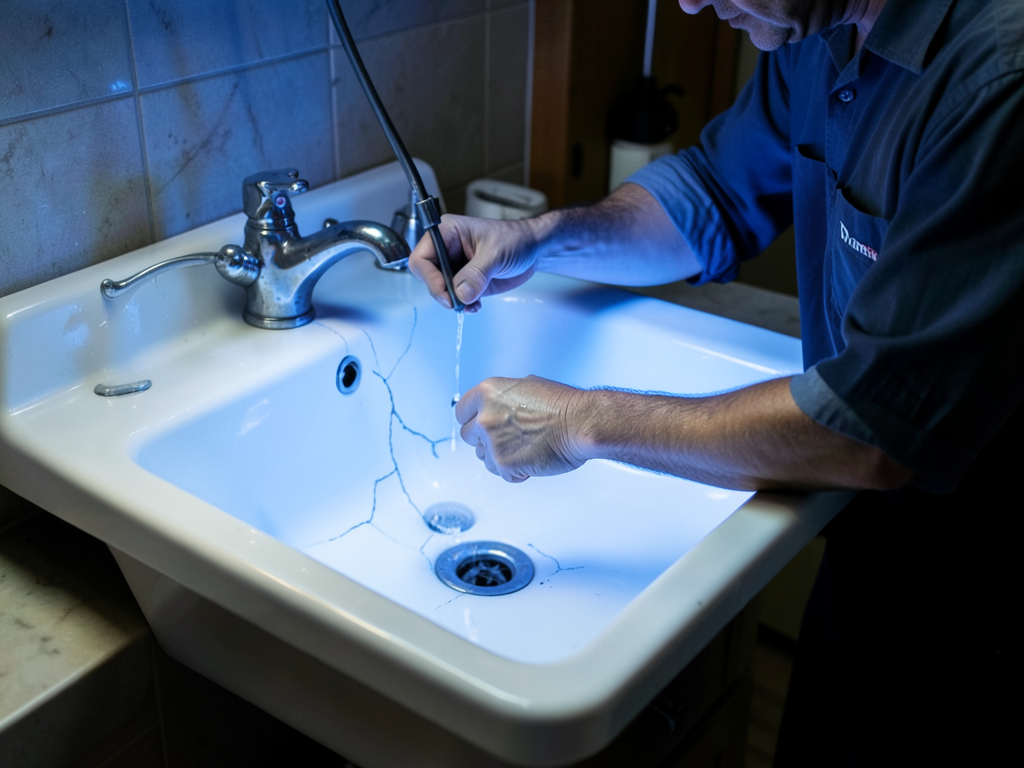
Technician examining a vintage cast iron sink for structural integrity using UV light to detect hidden cracks in the porcelain surface
Types of Damage: What Can Be Repaired vs. What Needs Replacement
Surface damage including minor chips, scratches, and staining often responds well to professional refinishing. The process involves thorough cleaning, acid etching to create bonding surface, and application of epoxy-based coatings that can restore the sink’s appearance for 10-15 years.
Structural damage tells a different story. Deep cracks that penetrate through the porcelain to the substrate typically require replacement. These cracks often result from impact damage or stress from improper installation. A simple diagnostic test involves tapping the sink surface with a metal object – intact areas produce a clear ring while cracked sections sound dull.
Crazing presents a unique challenge. While technically repairable through refinishing, the underlying cause – usually decades of thermal expansion and contraction – often returns within months. Many Boston preservation specialists recommend leaving minor crazing untouched as it represents the sink’s authentic age.
The Refinishing Process: What Professional Restoration Involves
Professional sink refinishing follows a specific protocol. Technicians first test for lead content using EPA-approved kits, then thoroughly clean and degrease the surface. The sink undergoes acid etching with hydrofluoric acid to create microscopic pores that allow new coating adhesion.
After etching, technicians apply a bonding agent followed by multiple layers of epoxy coating. The final step involves wet sanding and buffing to achieve a smooth, glossy finish that closely matches original porcelain. This process typically takes 2-3 days with a 48-hour curing period before use.
Cost considerations matter significantly. Professional refinishing in Boston averages $400-600 for a standard kitchen sink, while replacement with a quality reproduction can cost $800-1,200 plus demolition and installation labor. However, refinishing preserves the original fixture’s historical value and avoids demolition waste.
Lead Safety Concerns for Pre-1970s Porcelain Sinks
Many vintage porcelain fixtures manufactured before 1970 contain lead in decorative elements or glazes. The EPA’s RRP (Renovation, Repair, and Painting) Rule requires specific containment procedures when disturbing these surfaces. Boston plumbers must follow Massachusetts 248 CMR 10.00 regulations for lead-safe work practices.
Testing involves using 3M LeadCheck swabs or XRF analyzers to detect lead presence. If lead is detected, the refinishing process requires HEPA filtration, plastic containment barriers, and proper disposal of contaminated materials. Homeowners should verify their contractor’s EPA Lead-Safe certification before proceeding.
Even with lead present, many homeowners choose restoration over replacement. The lead risk is minimal when the surface remains intact and properly maintained. Refinishing actually encapsulates any lead-containing materials under new coatings, potentially reducing exposure compared to the original surface.
Historic Preservation Requirements in Boston’s Beacon Hill District
The Boston Landmarks Commission (BLC) oversees renovations in Beacon Hill’s historic districts. While sink replacement typically doesn’t require formal approval, any work affecting historic character should be reviewed. The BLC’s guidelines emphasize preserving original materials whenever feasible.
For homes within the Beacon Hill Historic District, replacement fixtures must match the original in style, scale, and material. Modern stainless steel sinks often face rejection due to their contemporary appearance. Reproduction porcelain sinks from manufacturers like Kohler or American Standard can provide period-appropriate alternatives.
Documentation becomes crucial for future sales. Keeping records of restoration work, including before-and-after photos and contractor information, helps demonstrate proper maintenance of historic features to potential buyers and preservation boards.
Modern Plumbing Compatibility Issues
Vintage sinks often present challenges when integrating with modern plumbing systems. Many pre-1950s fixtures use different drain configurations and faucet spread measurements than contemporary standards. Wall-mounted faucets on vintage sinks may require custom rough-in plumbing to align properly. Reliable 24 hour plumbing repair in the Back Bay.
P-trap retrofitting presents another common issue. Original sinks might use S-traps that don’t meet current code requirements. Massachusetts plumbing code mandates P-traps for proper drainage and sewer gas prevention. This often necessitates wall modifications to accommodate new trap configurations. Solving sewer line issues in older Dorchester homes without digging up the yard.
Supply line connections also vary. Older sinks might use 3/8-inch compression fittings while modern systems typically use 1/2-inch connections. Adapters can bridge these differences, but they add potential leak points that require careful sealing and testing.
Cost Comparison: Restoration vs. Replacement
| Factor | Professional Refinishing | Replacement with Reproduction | Replacement with Modern Sink |
|---|---|---|---|
| Material Cost | $0 (using existing fixture) | $400-600 (reproduction sink) | $200-400 (modern sink) |
| Labor Cost | $400-600 | $300-500 (installation only) | $400-600 (installation plus plumbing modifications) |
| Total Project Time | 3-4 days | 1-2 days | 2-3 days |
| Expected Lifespan | 10-15 years | 20-30 years | 15-20 years |
| Historic Value Preserved | Yes | Partial | No |
When Replacement Makes More Sense
Certain conditions make replacement the better option regardless of cost considerations. Extensive structural damage including multiple deep cracks or missing porcelain sections often cannot be adequately repaired. The structural integrity becomes compromised, creating potential failure points.
Modern functionality requirements sometimes necessitate replacement. If the sink’s configuration prevents installing a garbage disposal or doesn’t accommodate modern faucet features, replacement might better serve long-term needs. This is particularly relevant for homeowners who cook frequently or entertain often.
Environmental factors in older Beacon Hill homes can also drive replacement decisions. Persistent moisture problems, inadequate ventilation, or recurring mold issues around vintage sinks might indicate deeper problems that refinishing won’t address. In these cases, replacement provides an opportunity to upgrade surrounding materials and improve overall bathroom or kitchen function.
Finding Period-Appropriate Replacement Fixtures
When replacement becomes necessary, several sources offer reproduction fixtures that maintain historic character. Salvage yards in the Boston area, particularly those specializing in architectural antiques, often stock original vintage sinks removed from other historic renovations. These can provide authentic replacements at competitive prices.
Specialty manufacturers produce new fixtures designed to match historic profiles. Companies like Kohler’s Vintage Collection and American Standard’s Heritage line offer reproduction sinks with modern manufacturing quality but classic appearances. These fixtures typically cost 30-40% more than standard modern sinks but maintain architectural integrity.
Local plumbing suppliers in Boston’s South End and Jamaica Plain often maintain relationships with specialty manufacturers and can special-order period-appropriate fixtures. Some offer consultation services to help homeowners select options that complement their home’s specific architectural style. Plumbing Quincy.
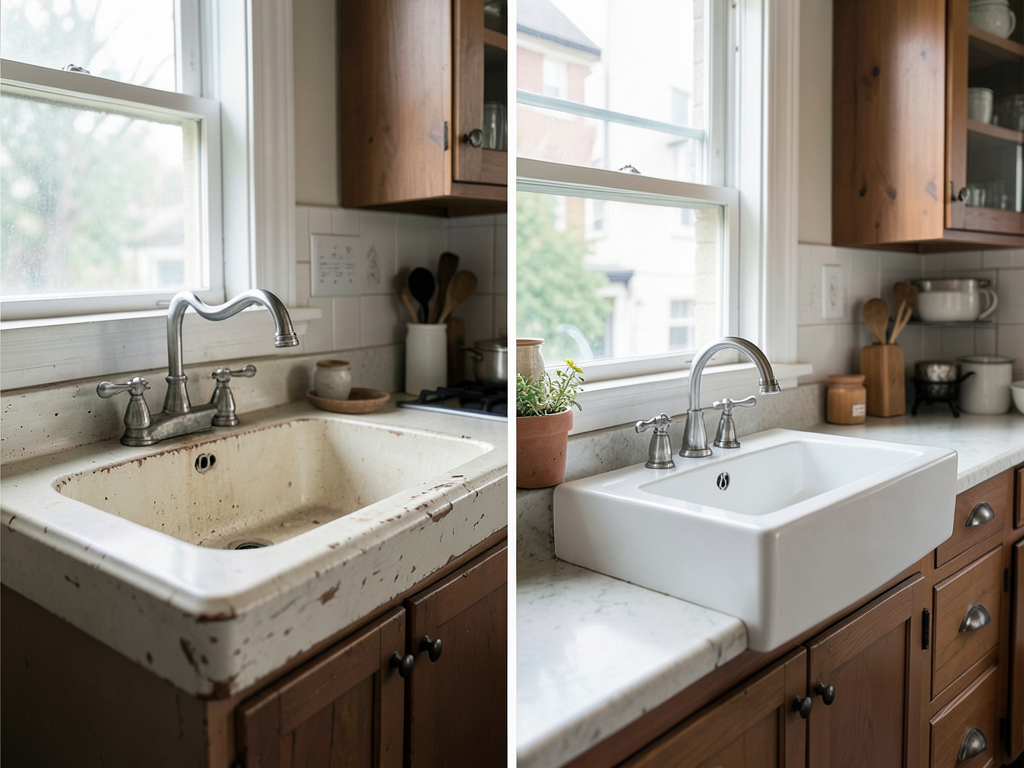
Side-by-side comparison of a restored vintage sink and a modern reproduction fixture installed in a 1920s Beacon Hill kitchen
Maintenance Tips for Extended Life Post-Restoration
Proper maintenance significantly extends the life of both restored and replacement vintage-style sinks. Avoid abrasive cleaners that can scratch surfaces and create areas where staining occurs. Instead, use pH-neutral cleaners specifically formulated for porcelain or enamel surfaces.
Address chips and scratches immediately. Small imperfections can allow moisture penetration that leads to more extensive damage. Touch-up kits matching your sink’s specific color are available from most refinishing companies and can prevent minor damage from becoming major repairs.
Water quality in Boston varies by neighborhood and can affect sink longevity. Areas with high mineral content may experience more staining and mineral buildup. Installing water softeners or using filtered water for cleaning can reduce these effects and maintain the sink’s appearance longer. Water heater replacement and repair for South Boston condos.
Impact on Home Value and Resale Considerations
Original architectural features often increase historic home values, particularly in Beacon Hill where authenticity commands premium prices. Restored vintage sinks can be selling points that distinguish your property from others with modern renovations. Real estate agents report that buyers specifically seeking historic homes often prioritize original fixtures.
However, functionality matters equally. A beautifully restored sink that doesn’t accommodate modern needs might actually detract from value. The ideal solution balances historic character with practical functionality that appeals to contemporary buyers while respecting the home’s architectural heritage.
Documentation of restoration work provides value during sales transactions. Detailed records showing professional restoration, lead testing results, and maintenance history give buyers confidence in the fixture’s condition and compliance with safety regulations.
DIY vs. Professional Restoration: Why Expertise Matters
DIY refinishing kits available at hardware stores offer lower initial costs but rarely deliver professional results. These products typically use acrylic or epoxy coatings that don’t bond as effectively as professional-grade materials. The finish often appears uneven, yellows over time, or peels within months.
Professional restoration involves specialized equipment including HVLP spray systems, industrial-grade coatings, and proper ventilation systems. Technicians also possess expertise in surface preparation that DIYers often overlook. The acid etching step, crucial for proper adhesion, requires handling hazardous chemicals safely.
Professional work includes warranties often covering 5-10 years, while DIY results typically have no guarantee. When considering the cost difference, professional restoration often proves more economical when factoring in the likelihood of needing redoing DIY work within a year or two.
Environmental Considerations: Restoration vs. Landfill Waste
Environmental impact represents an often-overlooked factor in the repair vs. replacement decision. Vintage sinks weigh 50-150 pounds and occupy significant landfill space. The manufacturing process for new fixtures also consumes resources and energy, creating a larger carbon footprint than restoration.
Restoration keeps existing materials in use, aligning with sustainable building practices increasingly valued by homeowners. The refinishing process generates minimal waste compared to full replacement, which involves disposal of the old fixture plus packaging waste from the new one.
Some Boston homeowners find that environmental considerations tip the balance toward restoration, particularly those committed to reducing their ecological footprint. This factor often combines with historic preservation values to make restoration the clear choice.
Making Your Final Decision
The decision between repairing or replacing a vintage sink ultimately depends on balancing several factors: the extent of damage, your budget, historic preservation requirements, and long-term plans for the home. For minor to moderate damage in structurally sound fixtures, professional restoration typically offers the best combination of cost-effectiveness and preservation of historic character.
Consider having a professional assessment before deciding. Experienced plumbers can evaluate the sink’s condition, test for lead, and provide specific recommendations based on your situation. This assessment often reveals issues or opportunities homeowners might overlook.
Remember that in Beacon Hill’s historic district, the decision might not be entirely yours. The Boston Landmarks Commission’s guidelines and potential future resale considerations should factor into your choice. When in doubt, restoration usually provides the safest path that satisfies both practical and preservation concerns.
Frequently Asked Questions
How long does professional sink refinishing typically last?
Professional refinishing generally lasts 10-15 years with proper maintenance. The lifespan depends on usage patterns, cleaning practices, and water quality. Harsh chemicals and abrasive cleaners can significantly reduce the finish’s durability.
Can all vintage sinks be refinished regardless of age?
Most vintage sinks can be refinished, but success varies by material and condition. Cast iron sinks with intact porcelain typically refinish well. Severely deteriorated fixtures or those with extensive structural damage may not be suitable candidates for restoration.
Does refinishing affect the sink’s value for historic preservation purposes?
Professional refinishing preserves the sink’s historic character and is generally acceptable to preservation boards. The process maintains the original fixture while improving functionality and appearance. Documentation of the restoration work helps demonstrate proper maintenance of historic features.
Next Steps for Your Beacon Hill Home
Ready to restore your vintage sink or need professional assessment? Call (617) 749-9799 today to schedule an inspection. Our experienced technicians understand Boston’s unique historic preservation requirements and can provide expert recommendations for your specific situation.
Don’t let a cracked sink diminish your home’s historic charm. Whether you need professional refinishing, lead testing, or guidance on replacement options, we’re here to help preserve your Beacon Hill home’s character while ensuring modern functionality. Call (617) 749-9799 now to speak with our restoration specialists.
Time matters when dealing with vintage fixtures. Small cracks can expand, and lead exposure risks increase with surface degradation. Take action today to protect your investment and your family’s safety. Call (617) 749-9799 for your free consultation.
You may also find this helpful. The Hidden Challenges of Adding a Second Floor Laundry Room to Your Older Home in Belmont.
{
“@context”: “https://schema.org”,
“@type”: “BlogPosting”,
“headline”: “Should You Repair or Replace a Cracked Vintage Sink in Your Historic Beacon Hill Home?”,
“description”: “Deciding between repairing or replacing a vintage sink in your Beacon Hill home? Get expert insights on porcelain restoration, lead safety, and Boston historic preservation.”,
“wordCount”: 2194,
“datePublished”: “2026-06-14T09:06:00.000Z”,
“dateModified”: “2026-06-14T09:06:00.000Z”,
“inLanguage”: “en-US”,
“mainEntityOfPage”: {
“@type”: “WebPage”,
“@id”: “https://heritageplumbingboston.com”
},
“publisher”: {
“@type”: “LocalBusiness”,
“name”: “Heritage Plumbing Boston”,
“url”: “https://heritageplumbingboston.com”
},
“author”: {
“@type”: “Organization”,
“name”: “Heritage Plumbing Boston”,
“url”: “https://heritageplumbingboston.com”
},
“image”: {
“@type”: “ImageObject”,
“url”: “https://heritageplumbingboston.com/wp-content/uploads/2026/03/should-you-repair-or-replace-a-cracked-vintage-sin-1.png”
}
}
{
“@context”: “https://schema.org”,
“@type”: “Plumber”,
“name”: “Heritage Plumbing Boston”,
“url”: “https://heritageplumbingboston.com”,
“address”: {
“@type”: “PostalAddress”,
“addressLocality”: “Boston”
},
“areaServed”: {
“@type”: “City”,
“name”: “Boston”
}
}
{
“@context”: “https://schema.org”,
“@type”: “FAQPage”,
“mainEntity”: [
{
“@type”: “Question”,
“name”: “How long does professional sink refinishing typically last?”,
“acceptedAnswer”: {
“@type”: “Answer”,
“text”: “Professional refinishing generally lasts 10-15 years with proper maintenance. The lifespan depends on usage patterns, cleaning practices, and water quality. Harsh chemicals and abrasive cleaners can significantly reduce the finish’s durability.”
}
},
{
“@type”: “Question”,
“name”: “Can all vintage sinks be refinished regardless of age?”,
“acceptedAnswer”: {
“@type”: “Answer”,
“text”: “Most vintage sinks can be refinished, but success varies by material and condition. Cast iron sinks with intact porcelain typically refinish well. Severely deteriorated fixtures or those with extensive structural damage may not be suitable candidates for restoration.”
}
},
{
“@type”: “Question”,
“name”: “Does refinishing affect the sink’s value for historic preservation purposes?”,
“acceptedAnswer”: {
“@type”: “Answer”,
“text”: “Professional refinishing preserves the sink’s historic character and is generally acceptable to preservation boards. The process maintains the original fixture while improving functionality and appearance. Documentation of the restoration work helps demonstrate proper maintenance of historic features.”
}
}
]
}
{
“@context”: “https://schema.org”,
“@type”: “BreadcrumbList”,
“itemListElement”: [
{
“@type”: “ListItem”,
“position”: 1,
“name”: “Home”,
“item”: “https://heritageplumbingboston.com”
},
{
“@type”: “ListItem”,
“position”: 2,
“name”: “Blog”,
“item”: “https://heritageplumbingboston.com/blog”
},
{
“@type”: “ListItem”,
“position”: 3,
“name”: “Should You Repair or Replace a Cracked Vintage Sink in Your Historic Beacon Hill Home?”
}
]
}
{
“@context”: “https://schema.org”,
“@type”: “Service”,
“serviceType”: “Plumbing”,
“provider”: {
“@type”: “LocalBusiness”,
“name”: “Heritage Plumbing Boston”,
“url”: “https://heritageplumbingboston.com”
},
“areaServed”: {
“@type”: “City”,
“name”: “Boston”
},
“description”: “Deciding between repairing or replacing a vintage sink in your Beacon Hill home? Get expert insights on porcelain restoration, lead safety, and Boston historic preservation.”
}