
Preventing Sand from Ruining the Plumbing in Your Hull Vacation Home
Living in a coastal community like Hull means enjoying the Atlantic breeze and sandy beaches, but it also means facing unique plumbing challenges that inland properties never experience. The combination of salt air, high water tables, and seasonal use creates a perfect storm for plumbing problems that can turn your beach retreat into a maintenance nightmare. Reliable 24 hour plumbing repair in the Back Bay.
Preventing sand from ruining the plumbing in your Hull vacation home starts with understanding how coastal conditions affect your pipes. From Nantasket Beach to the Hull Gut, every property along this peninsula faces similar threats: corrosive salt air eating away at exposed fixtures, sand particles infiltrating drain lines, and the freeze-thaw cycles that can burst pipes during the off-season. The good news is that with proper maintenance and the right materials, you can protect your investment and enjoy worry-free summers by the ocean.. Read more about Preventing Frozen Pipes in Exposed Fort Point Lofts This Winter.
The Unique Challenges of Coastal Plumbing in Hull
Coastal plumbing in Hull faces three major enemies: salt, sand, and seasonal neglect. Salt air contains corrosive chlorides that accelerate oxidation on copper pipes and brass fixtures, particularly on the ocean-facing sides of homes. The high water table common throughout the peninsula means sump pumps work overtime, and when they fail, basement flooding becomes a real threat. Sand from beach traffic finds its way into every drain, creating abrasive wear inside pipes and causing clogs that regular drain cleaners can’t fix. Water heater replacement and repair for South Boston condos.
The seasonal nature of many Hull properties compounds these problems. When homes sit vacant for months, small leaks become major disasters, and the lack of regular water flow allows sand and mineral deposits to build up in pipes. During winter, freeze-thaw cycles can cause pipes to expand and contract, creating weak points that burst when you’re not there to notice the problem.
Salt Air Corrosion: The Silent Pipe Killer
Salt air corrosion is particularly aggressive in Hull due to the constant ocean breeze. The Massachusetts Department of Environmental Protection notes that coastal areas experience corrosion rates up to 10 times higher than inland locations. This means that standard copper pipes installed on exterior walls or near windows might fail in just 5-7 years instead of the typical 20-30 years. Massachusetts State Plumbing Code.
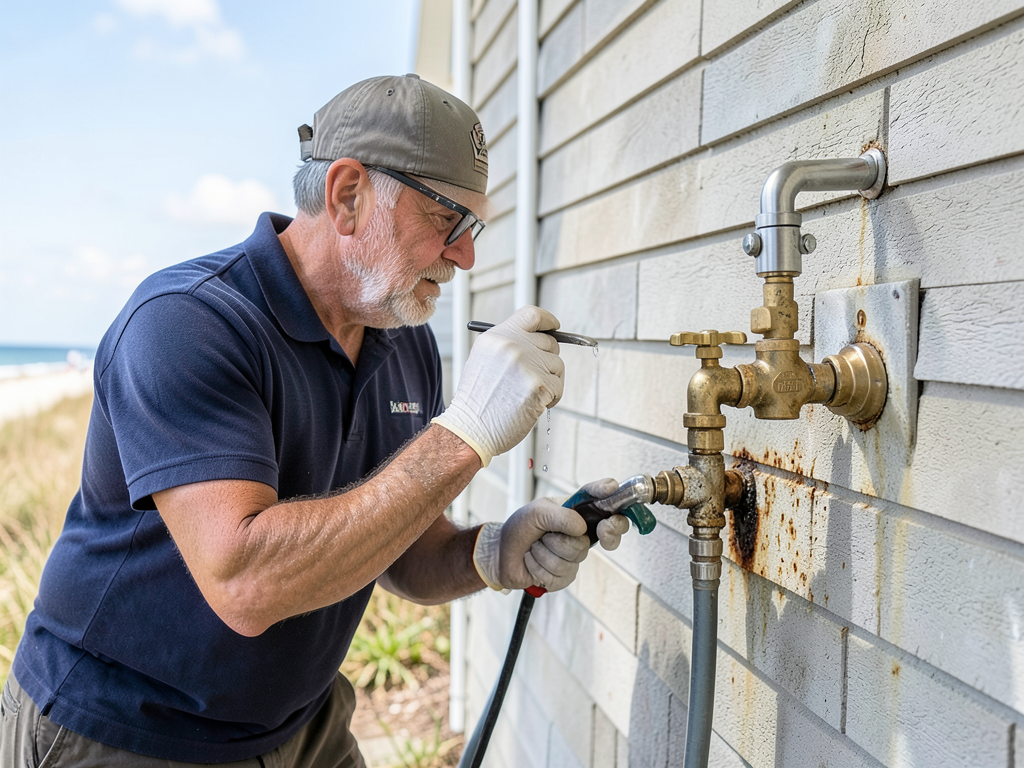
Look for signs like blue-green staining on fixtures, which indicates copper pipe corrosion, or white powdery deposits on faucets, which suggest mineral buildup accelerated by salt exposure. These are early warning signs that your plumbing system needs attention before major failures occur.
Seasonal Maintenance Checklist for Hull Homeowners
Creating a seasonal maintenance routine is your best defense against coastal plumbing problems. Start with a thorough inspection each spring when you open your property for the season. Check all visible pipes for signs of corrosion, test outdoor showers and faucets, and inspect the water heater for any signs of rust or leakage.
Fall preparation is equally important. Before closing up for the winter, drain outdoor lines, insulate exposed pipes, and consider having a professional blowout service to remove any remaining water from sprinkler systems and outdoor showers. This prevents freeze damage during the harsh New England winters that Hull experiences.
Spring Opening Protocol for Hull Beach Houses
When opening your Hull vacation home in spring, follow this systematic approach: First, turn on the main water supply slowly to prevent pressure surges. Next, check all fixtures for leaks, paying special attention to outdoor showers and hose bibs that were exposed to salt air all winter. Test the sump pump by pouring water into the pit to ensure it activates properly.
Finally, run water through all drains for several minutes to flush out any sand or debris that may have accumulated during the off-season. Pay special attention to kitchen and bathroom drains, as these are most likely to have sand buildup from beachgoers tracking sand into the house.
Corrosion-Resistant Solutions for Shoreline Properties
Choosing the right materials is crucial for coastal plumbing. PEX piping has become the gold standard for beach houses because it resists both corrosion and freeze damage better than copper. The plastic composition doesn’t react with salt air, and the flexibility allows for expansion without bursting.
For fixtures, consider stainless steel or marine-grade brass instead of standard brass or chrome-plated fixtures. These materials are specifically designed to withstand salt spray and won’t show the corrosion patterns that plague regular fixtures. Outdoor showers should have all-stainless construction, including the showerhead and valves.
Water Heater Protection in Salt-Air Environments
Water heaters in Hull properties face unique challenges from both salt air and hard water. The Massachusetts Water Resources Authority reports that Hull’s water has moderate hardness levels, which combined with salt air exposure, can reduce a standard water heater’s lifespan by 30-40%. Installing a tankless water heater can eliminate the rust and sediment issues common in traditional tank heaters.
If you prefer a traditional tank, choose one with a heavy-duty anode rod and consider adding a water softener to reduce mineral buildup. The initial investment pays off through longer equipment life and fewer emergency repairs during your vacation season. Heavy duty sump pump installation for flood-prone basements in Quincy.
Sand Management: Keeping Your Drains Clear
Sand is the most persistent problem for Hull beach house plumbing. Every time someone comes in from Nantasket Beach, sand particles wash down your drains, creating an abrasive mixture that wears away pipe interiors over time. The solution isn’t just about cleaning drains; it’s about preventing sand from entering your plumbing system in the first place.
Install outdoor foot wash stations with proper drainage away from your home’s foundation. Use sand traps or filters on shower drains, particularly in outdoor showers where sand accumulation is worst. These simple additions can extend your plumbing system’s life by years.
Professional Sand Trap Installation and Maintenance
A properly installed sand trap captures sand before it enters your main plumbing system. The trap should be easily accessible for cleaning and positioned where most sand enters the house, typically near exterior doors or outdoor shower areas. Professional installation ensures proper sizing and placement for your specific property layout.
Maintenance involves regular cleaning of the trap, usually monthly during the summer season and before closing the property for winter. This simple task prevents the need for expensive drain cleaning services and protects your pipes from abrasive damage.
Flood Zone Plumbing Requirements for Hull Properties
Many Hull properties fall within FEMA-designated flood zones, which means specific plumbing requirements apply. The Massachusetts State Building Code requires backwater valves on all sewer connections in flood-prone areas to prevent sewage backup during high tides or storm surges. These valves are particularly important in low-lying areas near the Hull Gut and along the bayside properties. FEMA flood zone information.
Sump pump systems in flood zones must have battery backup capability to function during power outages, which often accompany coastal storms. The code also requires that sump pump discharge be directed away from the foundation and not into the municipal sewer system, which is a common violation in older properties. Solving sewer line issues in older Dorchester homes without digging up the yard.
Emergency Plumbing Services for Hull’s Coastal Properties
When plumbing emergencies strike your Hull vacation home, you need a plumber who understands coastal systems. Unlike inland properties, beach houses often require specialized knowledge of salt-air corrosion, sand management, and seasonal plumbing systems. A plumber familiar with Hull’s unique challenges can diagnose problems faster and recommend solutions that work in the coastal environment.
Look for a service provider who offers 24/7 emergency response, as plumbing problems in vacation homes often occur during off-hours when you’re trying to enjoy your property. Quick response times can mean the difference between a minor repair and major water damage. Gas leak detection and emergency repair for Jamaica Plain residents.
Local Hull Plumbing Codes and Compliance
Hull follows the Massachusetts State Plumbing Code, but local enforcement can be strict, particularly for properties in historic districts or flood zones. Any major plumbing work requires permits from the Hull Building Department, and inspections are mandatory before covering any new installations. This includes water heater replacements, bathroom additions, and major drain line repairs.
The town also has specific requirements for outdoor showers and irrigation systems due to water conservation efforts. These systems must have backflow prevention devices installed, and many require separate meters to track outdoor water usage separately from indoor consumption.
Choosing the Right Plumber for Your Hull Property
Not all plumbers are equipped to handle the unique challenges of coastal properties. When selecting a plumber for your Hull vacation home, look for experience with beach house plumbing, knowledge of local codes, and familiarity with salt-air corrosion prevention techniques. Ask about their experience with seasonal properties and whether they offer maintenance contracts for part-time residents.
A good coastal plumber should be able to explain the differences between materials, recommend appropriate fixtures for your specific location, and provide a maintenance schedule tailored to your property’s exposure to salt air and sand.
Cost-Effective Maintenance Strategies
Preventing plumbing problems is always cheaper than repairing them. For Hull vacation homeowners, this means investing in quality materials upfront and following a consistent maintenance schedule. While premium stainless steel fixtures and PEX piping cost more initially, they typically last 2-3 times longer than standard materials in coastal environments.
Consider a maintenance contract with a local plumber who can perform seasonal inspections and catch problems before they become emergencies. The cost of annual maintenance is minimal compared to the expense of emergency repairs during your vacation season or the cost of water damage from a burst pipe.
Frequently Asked Questions
How often should I have my Hull beach house plumbing inspected?
Professional inspection should occur at least twice yearly – once when opening the property in spring and again before closing in fall. However, if your property sees heavy use during summer months, consider a mid-season inspection to catch any developing issues before they become major problems.
What are the signs that my plumbing needs immediate attention?
Watch for reduced water pressure, which could indicate pipe corrosion or mineral buildup. Unusual sounds in pipes, such as banging or whistling, often signal loose connections or failing components. Visible corrosion on fixtures, especially green or white deposits, indicates that pipes may be deteriorating internally.
Can I handle plumbing maintenance myself, or should I always call a professional?
While basic tasks like cleaning sand traps and checking for visible leaks are fine for homeowners, coastal plumbing systems benefit from professional expertise. The corrosive nature of salt air means problems often develop in areas you can’t see, and a professional inspection can identify issues before they cause major damage.
How do I protect my outdoor shower plumbing during the off-season?
Drain all water from outdoor shower lines by opening valves and allowing complete drainage. Remove and store showerheads indoors if possible. Insulate any exposed pipes with foam insulation rated for outdoor use. Consider having a professional blowout service remove any remaining water that could freeze and cause damage.
What’s the average lifespan of plumbing fixtures in a coastal environment?
Standard fixtures in coastal environments typically last 5-7 years, while corrosion-resistant materials like marine-grade stainless steel can last 15-20 years. PEX piping generally outlasts copper by 2-3 times in salt-air environments. Regular maintenance can extend these lifespans significantly.
Are there specific plumbing requirements for rental properties in Hull?
Yes, rental properties must comply with additional Massachusetts rental housing regulations, including working smoke detectors, proper egress from basement areas, and often more frequent inspections. Some insurance companies also require specific plumbing upgrades for rental properties, particularly regarding backflow prevention and emergency shut-off systems.
Protect Your Investment with Professional Care
Your Hull vacation home represents a significant investment, and protecting it from plumbing disasters should be a top priority. The combination of salt air, sand, and seasonal use creates unique challenges that require specialized knowledge and materials. By following proper maintenance procedures and working with experienced coastal plumbers, you can prevent most plumbing emergencies before they occur.
Don’t wait until a small leak becomes a major flood or until corrosion causes a pipe to burst during your summer vacation. Take proactive steps now to protect your plumbing system. The peace of mind that comes from knowing your beach house plumbing is protected is worth every preventive measure you take.
Ready to Protect Your Hull Beach House Plumbing?
Call (617) 749-9799 today to schedule your comprehensive coastal plumbing inspection. Our team understands the unique challenges that Hull properties face and can recommend the right solutions to keep your plumbing system running smoothly season after season. Don’t let sand and salt air ruin your vacation home – take action now and enjoy worry-free summers by the ocean.
Whether you need emergency repairs, seasonal maintenance, or a complete plumbing system upgrade, we’re here to help. Our 24/7 emergency service means we’re always available when plumbing problems strike, and our experience with Hull’s specific challenges ensures we’ll get the job done right the first time. Pick up the phone and call (617) 749-9799 before the next storm hits or before small problems turn into major disasters.
{
“@context”: “https://schema.org”,
“@type”: “BlogPosting”,
“headline”: “Preventing Sand from Ruining the Plumbing in Your Hull Vacation Home”,
“description”: “Protect your Hull beach house plumbing from sand, salt air, and seasonal damage. Learn local maintenance tips for coastal properties in Nantasket Beach and Hull Gut.”,
“wordCount”: 2200,
“datePublished”: “2026-04-11T11:22:00.000Z”,
“dateModified”: “2026-04-11T11:22:00.000Z”,
“inLanguage”: “en-US”,
“mainEntityOfPage”: {
“@type”: “WebPage”,
“@id”: “https://heritageplumbingboston.com”
},
“publisher”: {
“@type”: “LocalBusiness”,
“name”: “Heritage Plumbing Boston”,
“url”: “https://heritageplumbingboston.com”
},
“author”: {
“@type”: “Organization”,
“name”: “Heritage Plumbing Boston”,
“url”: “https://heritageplumbingboston.com”
},
“image”: {
“@type”: “ImageObject”,
“url”: “https://heritageplumbingboston.com/wp-content/uploads/2026/03/preventing-sand-from-ruining-the-plumbing-in-your-1.png”
}
}
{
“@context”: “https://schema.org”,
“@type”: “Plumber”,
“name”: “Heritage Plumbing Boston”,
“url”: “https://heritageplumbingboston.com”,
“address”: {
“@type”: “PostalAddress”,
“addressLocality”: “Boston”
},
“areaServed”: {
“@type”: “City”,
“name”: “Boston”
}
}
{
“@context”: “https://schema.org”,
“@type”: “FAQPage”,
“mainEntity”: [
{
“@type”: “Question”,
“name”: “How often should I have my Hull beach house plumbing inspected?”,
“acceptedAnswer”: {
“@type”: “Answer”,
“text”: “Professional inspection should occur at least twice yearly – once when opening the property in spring and again before closing in fall. However, if your property sees heavy use during summer months, consider a mid-season inspection to catch any developing issues before they become major problems.”
}
},
{
“@type”: “Question”,
“name”: “What are the signs that my plumbing needs immediate attention?”,
“acceptedAnswer”: {
“@type”: “Answer”,
“text”: “Watch for reduced water pressure, which could indicate pipe corrosion or mineral buildup. Unusual sounds in pipes, such as banging or whistling, often signal loose connections or failing components. Visible corrosion on fixtures, especially green or white deposits, indicates that pipes may be deteriorating internally.”
}
},
{
“@type”: “Question”,
“name”: “Can I handle plumbing maintenance myself, or should I always call a professional?”,
“acceptedAnswer”: {
“@type”: “Answer”,
“text”: “While basic tasks like cleaning sand traps and checking for visible leaks are fine for homeowners, coastal plumbing systems benefit from professional expertise. The corrosive nature of salt air means problems often develop in areas you can’t see, and a professional inspection can identify issues before they cause major damage.”
}
},
{
“@type”: “Question”,
“name”: “How do I protect my outdoor shower plumbing during the off-season?”,
“acceptedAnswer”: {
“@type”: “Answer”,
“text”: “Drain all water from outdoor shower lines by opening valves and allowing complete drainage. Remove and store showerheads indoors if possible. Insulate any exposed pipes with foam insulation rated for outdoor use. Consider having a professional blowout service remove any remaining water that could freeze and cause damage.”
}
},
{
“@type”: “Question”,
“name”: “What’s the average lifespan of plumbing fixtures in a coastal environment?”,
“acceptedAnswer”: {
“@type”: “Answer”,
“text”: “Standard fixtures in coastal environments typically last 5-7 years, while corrosion-resistant materials like marine-grade stainless steel can last 15-20 years. PEX piping generally outlasts copper by 2-3 times in salt-air environments. Regular maintenance can extend these lifespans significantly.”
}
},
{
“@type”: “Question”,
“name”: “Are there specific plumbing requirements for rental properties in Hull?”,
“acceptedAnswer”: {
“@type”: “Answer”,
“text”: “Yes, rental properties must comply with additional Massachusetts rental housing regulations, including working smoke detectors, proper egress from basement areas, and often more frequent inspections. Some insurance companies also require specific plumbing upgrades for rental properties, particularly regarding backflow prevention and emergency shut-off systems.”
}
},
{
“@type”: “Question”,
“name”: “Ready to Protect Your Hull Beach House Plumbing?”,
“acceptedAnswer”: {
“@type”: “Answer”,
“text”: “Call (617) 749-9799 today to schedule your comprehensive coastal plumbing inspection. Our team understands the unique challenges that Hull properties face and can recommend the right solutions to keep your plumbing system running smoothly season after season. Don’t let sand and salt air ruin your vacation home – take action now and enjoy worry-free summers by the ocean.”
}
}
]
}
{
“@context”: “https://schema.org”,
“@type”: “BreadcrumbList”,
“itemListElement”: [
{
“@type”: “ListItem”,
“position”: 1,
“name”: “Home”,
“item”: “https://heritageplumbingboston.com”
},
{
“@type”: “ListItem”,
“position”: 2,
“name”: “Blog”,
“item”: “https://heritageplumbingboston.com/blog”
},
{
“@type”: “ListItem”,
“position”: 3,
“name”: “Preventing Sand from Ruining the Plumbing in Your Hull Vacation Home”
}
]
}
{
“@context”: “https://schema.org”,
“@type”: “Service”,
“serviceType”: “Plumbing”,
“provider”: {
“@type”: “LocalBusiness”,
“name”: “Heritage Plumbing Boston”,
“url”: “https://heritageplumbingboston.com”
},
“areaServed”: {
“@type”: “City”,
“name”: “Boston”
},
“description”: “Protect your Hull beach house plumbing from sand, salt air, and seasonal damage. Learn local maintenance tips for coastal properties in Nantasket Beach and Hull Gut.”
}